Cocoon is a dance-theatre work first performed on the evening of 31 October 2020 at P4 Theater in Beijing, directed by Huang Yiyin, with choreography and performance by Hao Jie. Professionally trained dancers and nonprofessional participants made this work about prejudice together. A 44:26 edited film, a post-performance report and named backstage accounts preserve its movements, viewing positions and rehearsal choices.[S7][S9]
Three movements unfold, and the solo ends in exhaustion
“In fact, I never left that circle in the end; by the end I was exhausted.” — Lu Yang, translated from Chinese[S12]
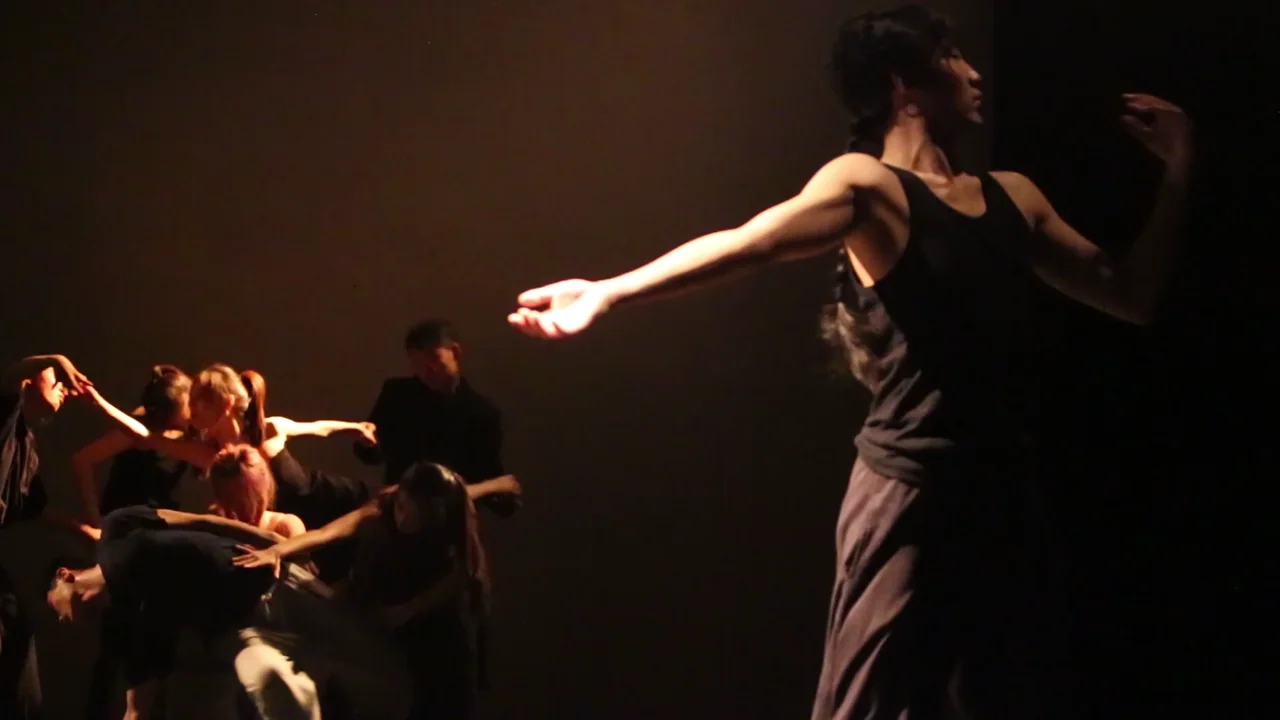
Lu Yang describes a solo improvised from three movements, potentially different each time. He stays until the end, repeating movements to portray someone within a group who remains misunderstood but wants to follow their own direction. The ending he describes is exhaustion, still within his own circle.[S12]
The post-performance report describes the theme as breaking out of the cocoon; Lu Yang's account preserves a moment in which that breakthrough remains incomplete. There is tension between these two accounts: a shared direction towards breaking through can coexist with an individual's continued confinement. Does leaving a group mean escaping one's own limits? The work leaves that question unresolved here.[S9][S12]
Why the stilt passage cares whether the audience sits higher or lower
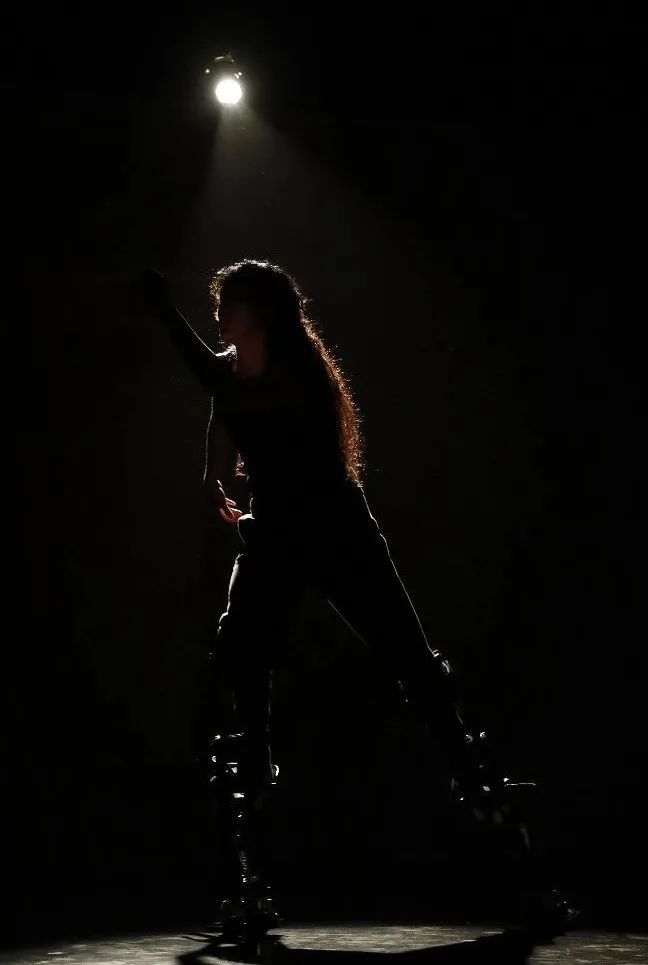
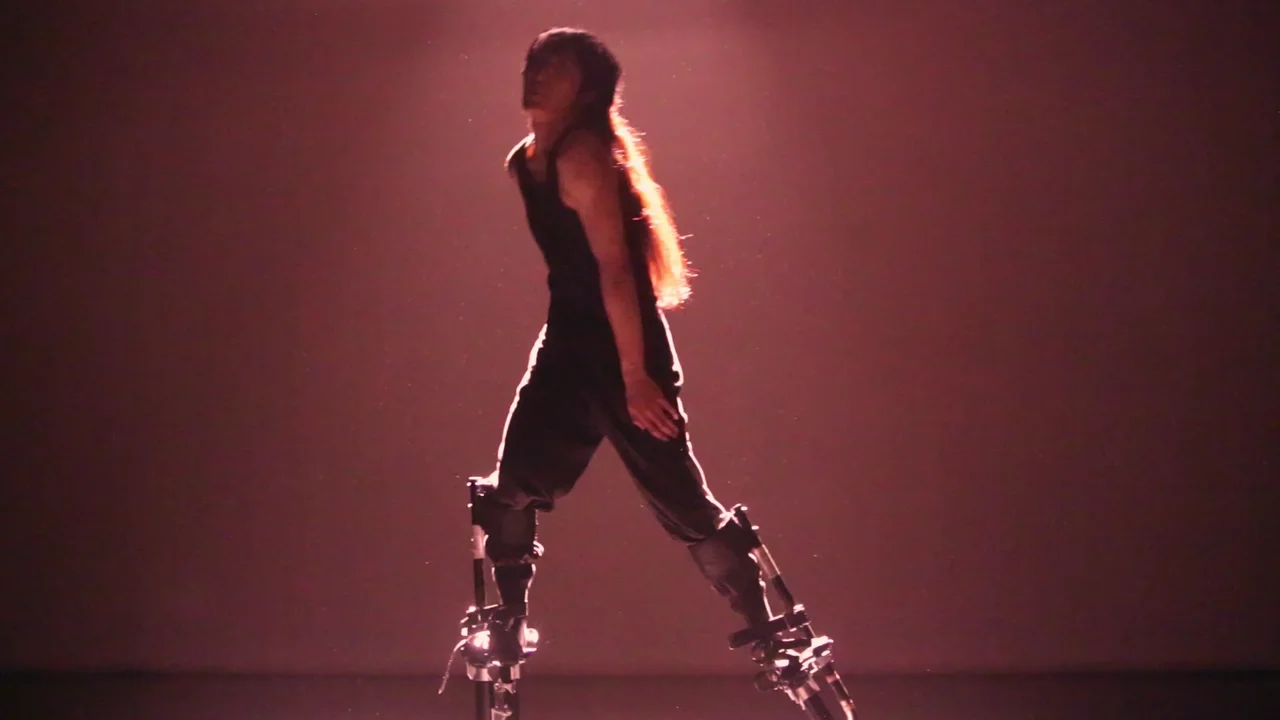
Discussing the stilt passage, Hao Jie makes the audience's position part of the work. He uses repeated movement to express repentance and redemption, but worries that viewers looking down from the second floor might see the person as small and deserving of that position. He wants viewers to encounter the body from a lower angle.[S13]
“I don't want people to feel that this repentance is insignificant.” — Hao Jie, translated from Chinese[S13]
The height relationship between spectator and performer is therefore part of what to look at. Hao Jie is concerned both with performing the movement and with how it will be understood. Reading his account alongside the photograph brings a spatial choice into focus: where a spectator looks from can take part in forming a judgement.[S13]
The people leave; the light stays with two apples
The post-performance report describes an ordinary action at the ending: Hao Jie and Xiaonan sit at centre stage, each eating an apple. After putting the apples down, they leave one after the other; the lighting directs the audience to keep looking at the stage.[S9]
43:20 · Apple held to the mouth ↗: in close-up, a performer holds a red apple to their mouth.
43:30 · Apples between two performers ↗: two performers sit on opposite sides, with two apples between them.
44:00 · Empty stage and apples ↗: two apples remain at the centre of an empty stage, still under a beam of light.
Return to 0:20 · Apples near the beginning ↗: a green apple and a red apple, already bearing bite marks, appear in close-up near the beginning of the film. The edit places the apples near both ends of the screen work. After watching the bodies, look at the objects remaining in the light: attention can shift from the performers to what they leave behind.[V1]
Unsettled positions ask dancers to learn how to respond to others
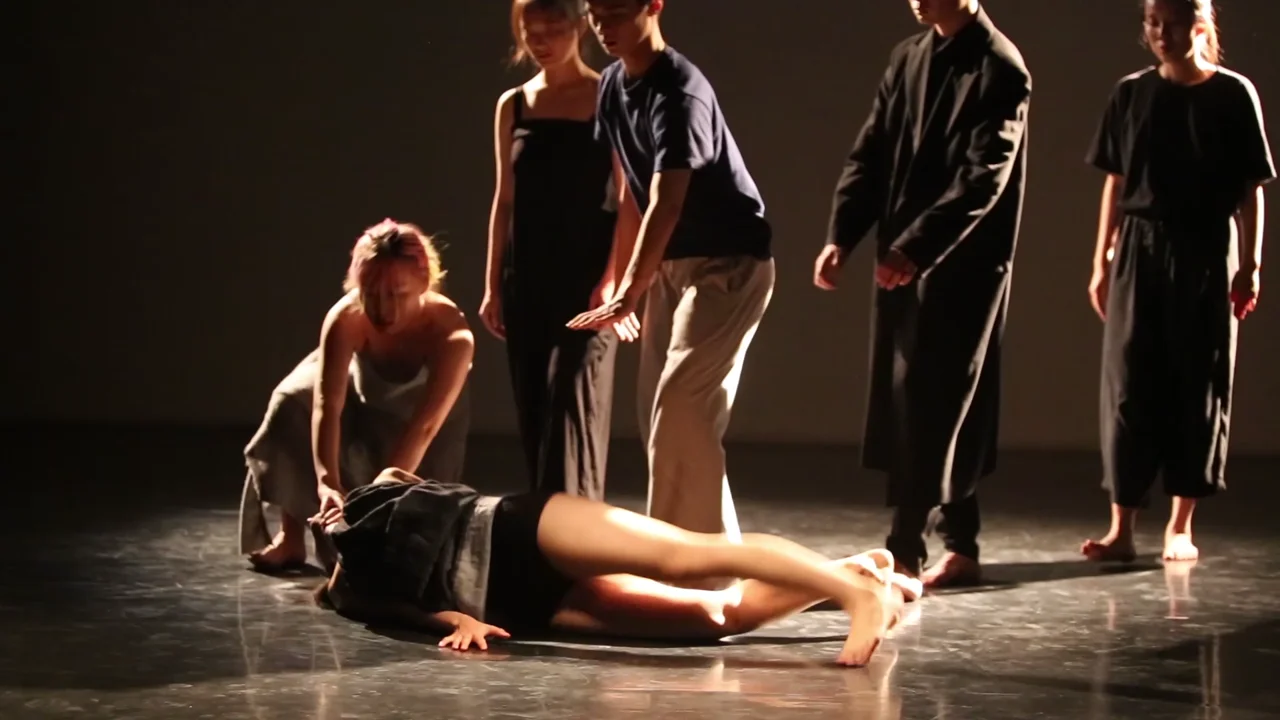
The recruitment notice did not require professional dance training. The post-performance report describes difficulties coordinating nonprofessional participants' schedules. Choreographer Hao Jie began with contact improvisation, generating movement through physical contact and interaction. After opening recruitment, the team still had to find ways for people with different experience to work together.[S1][S9]
Dancer He Linli recalls that the group choreography's positions had not been settled at the outset. Each time, she had to concentrate on remembering whom to face and which movement to make. School training specified positions and angles precisely; this different way of working initially tired her, then felt fresh as she adapted. Making the work together required additional, concrete labour: finding relationships while remembering and organising a performance.[S11]
In the same interview, Chen Du distinguishes moving to music from telling a story through the body. Despite years of dance training, he wanted to develop his capacity for bodily expression. This gives rehearsals involving professionals and nonprofessionals another dimension: learning was not confined to people stepping onstage for the first time.[S11]
A theme begins with one form of discrimination and broadens through collaboration
In the published backstage conversation, Huang Yiyin says the work began with discrimination against LGBTQ people. Through conversations with Hao Jie during creation, its scope broadened towards prejudice more generally: something people may encounter and also bring to their own judgements of others.[S10]
This development helps connect the choices described above. Lu Yang discusses limits that remain after separating from a group; Hao Jie links viewing position with judgement; rehearsals ask people with different backgrounds to find responses through bodily interaction. They approach prejudice from different positions and do not arrive at identical answers. This is a reading across published accounts, not a claim that the work ultimately resolves prejudice.[S10][S11][S12][S13]
The collaboration had little time. A production article published on 29 October recalls scheduling in September, rehearsals beginning on 16 October and a production involving almost twenty people, working towards an audience at the month's end. The later report confirms the performance on the evening of 31 October. Almost twenty refers to the production team, including work offstage, not the number of performers.[S8][S9]
Who made the work
The published programme credits director Huang Yiyin; choreographer and dancer Hao Jie; and dancers Sun Xiaonan, Chen Du, Gu Yulan, Wu Fan, He Linli, Lu Yang, Chen Runze and Shi Pengtao. P4 Theater is credited as producer.[S7][S9]
He Fa's published remarks concern participation and organisation: participants can offer opinions and discuss theatre projects they might want to make in future. His account gives a lead into how P4 invited further work; the directing credit for Cocoon remains Huang Yiyin's.[S10]
Continue watching and reading
Start with the 44:26 edited stage film, or enter the ending at 43:20 · Apple held to the mouth ↗ and return to 0:20 · Apples near the beginning ↗.[V1] Read Lu Yang and Hao Jie on the choices behind the movements; read He Linli and Chen Du on how rehearsals unfolded.[S12][S13][S11]
The 1:16 digital-edition trailer is a separate promotional version.[V2] The recruitment notice, audition task summaries and proposed post-performance improvisation remain in the sources below, offering further leads into participation before and after the stage work.[S1][S4][S5][S6]