Entering Cocoon through an invitation
The public materials for Cocoon offer several ways into the work. A recruitment notice invites people into rehearsal; publicity describes production as a period of shared commitment; a trailer introduces the work; and a 44:26 edited stage film makes bodies and stage space available for repeated viewing. Read together, they show how a production was invited, narrated and preserved. Establishing what happened at each step still requires process evidence. The recruitment text seeks five to eight dancers, sets no age limit and does not require professional dance training. These are stated entry conditions, not evidence of the training of any person visible in the film.[S1] This reading follows the production timeline described in the documents, moves through three moments in one film edition, and returns to specific rehearsal questions.
A production timeline with an unresolved difference
The text titled Sixteen Days and Nights of Anticipation at P4 presents a sequence: scheduling in September, recruitment completed in early October, rehearsals beginning on 16 October, and a public performance planned for 31 October. It lists performing, lighting, recording, directing, hosting, publicity, choreography, audiences, props and production, framing the event as the meeting of several kinds of work.[S2] A consolidated publicity draft instead says that the performers were settled only on 15 October, describes roughly half a month of rehearsal, and advertises 31 October at 19:30.[S3] Completing recruitment and settling the cast may refer to different steps; the wording may also reflect different accounts across drafts. Both formulations remain visible here. Neither is selected as an independently verified production date. The difference opens a precise question: how did recruitment, confirmation of participants and the start of rehearsal connect? These dates are claims in historical publicity documents. File order cannot establish the order of the drafts, and advertised schedules do not replace attendance records or dated rehearsal logs.
A second invitation: beyond the performance
Another publicity draft proposes a body-improvisation experience after the performance. Performers would lead audience members in bodily communication, renewed attention to the surrounding space and further stage creation.[S4] Read alongside the recruitment notice, it describes two forms of entry: joining the making of the work, then joining an activity after watching it.[S1][S4] This is a documented proposal. It makes further questions concrete: how would the guidance begin, how would spectators enter the acting area, and how would the performance give way to participation? The documents and film stills below do not establish that the activity took place as proposed. A group visible in the stage film must not automatically be labelled as participating audience members.
Three moments in one film: bodies and space
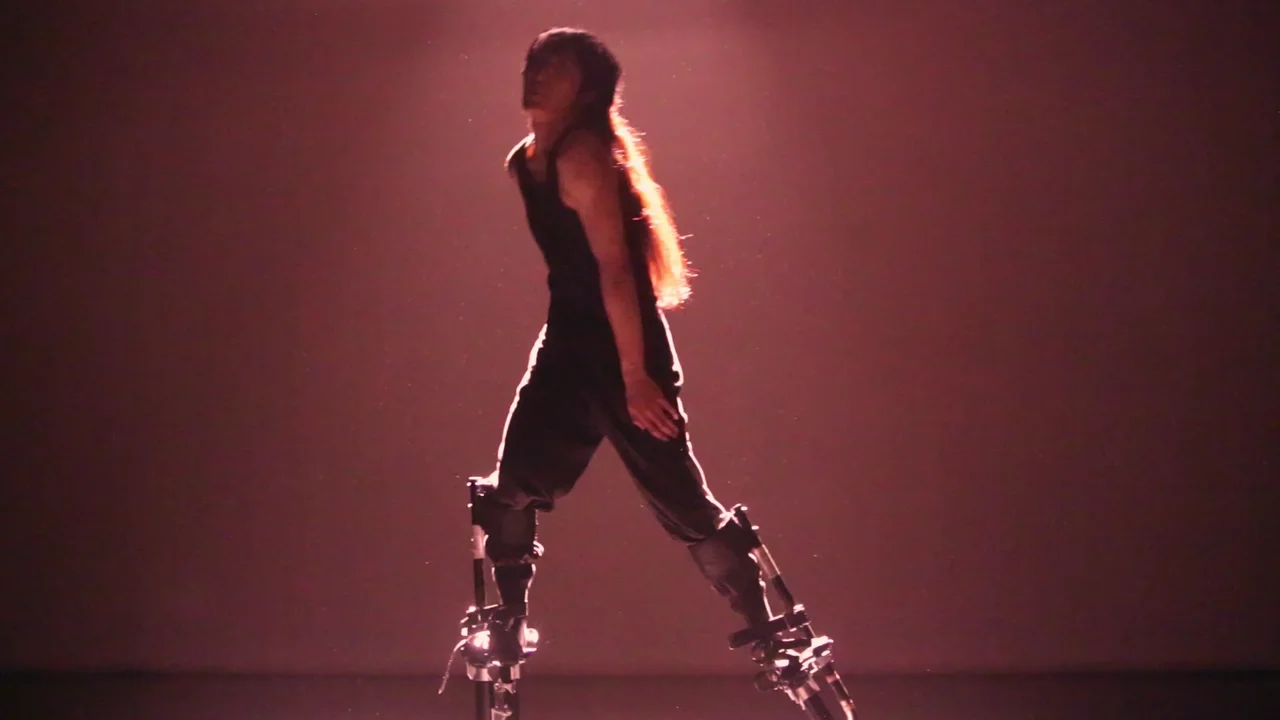
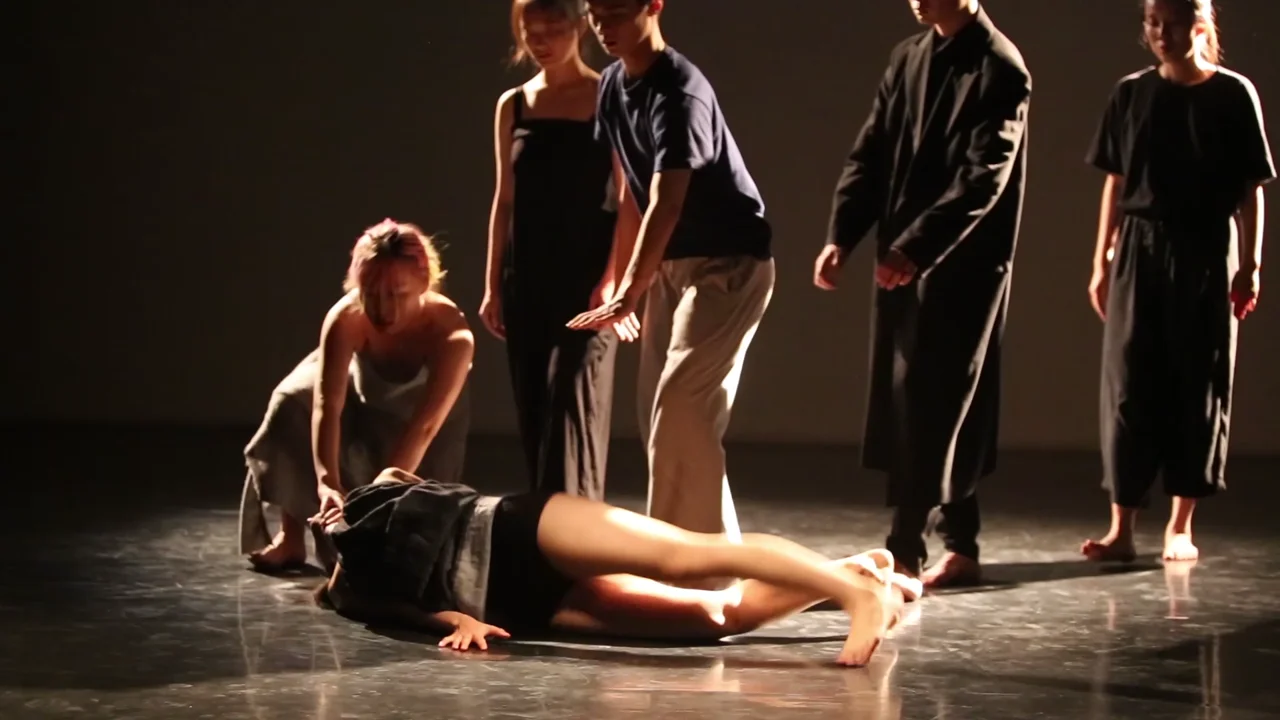
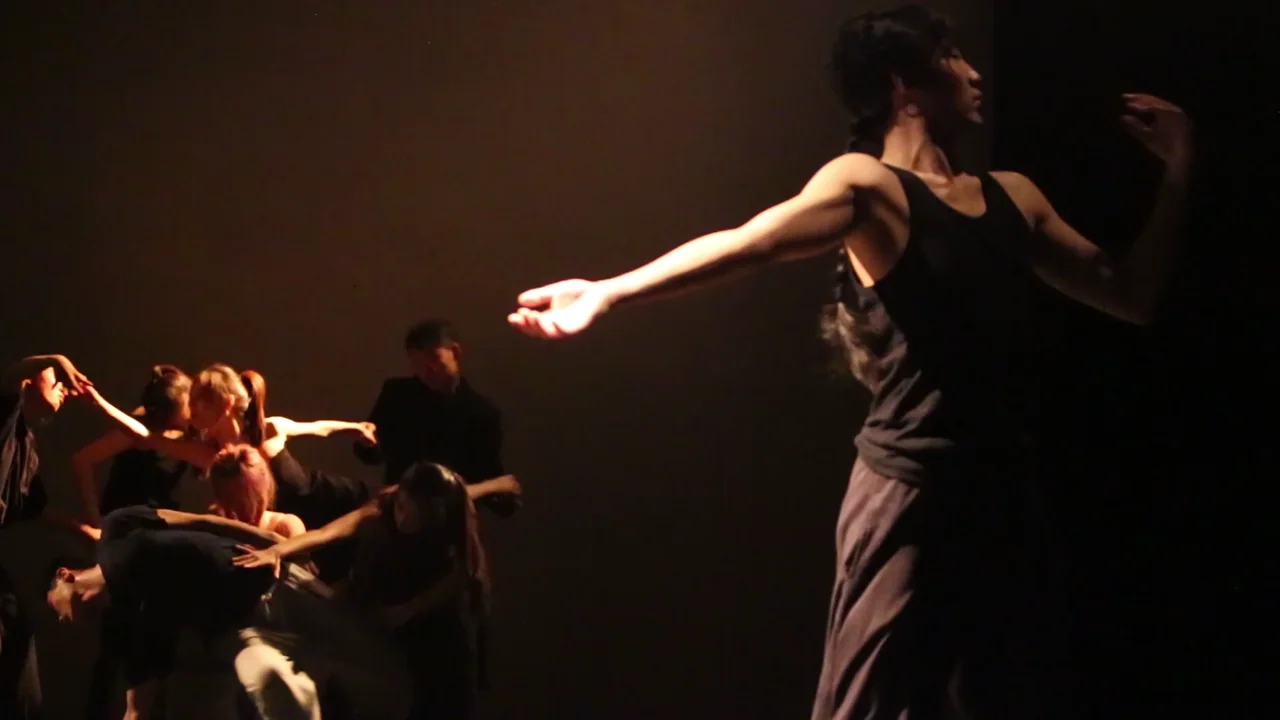
Open the 44:26 edited stage film, then use three verified stills to return to the moving image. All three were taken from the exact file uploaded for this public edition; their times belong only to this edition.[V1] 18:00: red light outlines a performer in a stride, with apparatus visible beside the legs. The image supports attention to the outline, stride and light. The apparatus does not establish a medical condition or a personal identity.[V3] 33:00: standing, crouching or sitting, and side-lying bodies occupy different levels in one acting area. This invites a question about how several positions compose the space. A still does not show how those positions developed; return to the film to examine what comes before and after.[V4] 38:00: extended arms in the foreground contrast with a lower group farther back, while different arm directions create another spatial comparison.[V5] Together, the three moments offer a practical viewing route: from one body and light, to the heights of several bodies, to depth and direction. This is an editorial reading sequence, not a claim about rehearsal stages, character identities or choreographic intentions.
What the trailer, film and documents preserve
The 1:16 digital-edition trailer provides a promotional entry; the 44:26 edited film provides a longer view of the stage work. They remain separate editions, and trailer timestamps cannot be converted into film timestamps.[V2][V1] The film page also retains the existing main-channel edition. Without a verified timing map, each edition should be approached through its own entry point. The documents preserve entry conditions, production accounts and proposed activities. Film stills preserve visible postures and space at specific moments in an edited record. The two kinds of evidence can support questions about the same project, but cannot substitute for one another. Whether open recruitment produced different working methods requires rehearsal evidence; a visible stage grouping does not establish agreement during production.
Following the next evidence
Two checks now have concrete targets. First, compare the different descriptions of recruitment and cast confirmation with dated, revised rehearsal schedules. Second, compare the proposed post-performance improvisation with an independent record that can distinguish an invitation from an activity actually led.[S2][S3][S4] The references below lead to each document, film and trailer. The sidebar connects the Cocoon project and its invitation-and-rehearsal dossier. This page establishes a traceable reading between public documents and visible images. Further public evidence can support a revised account of the process while this edition remains available.